
The Secret of Marketing was discovered in 1936 and everyone forgot

Updated: Jun 26, 2025
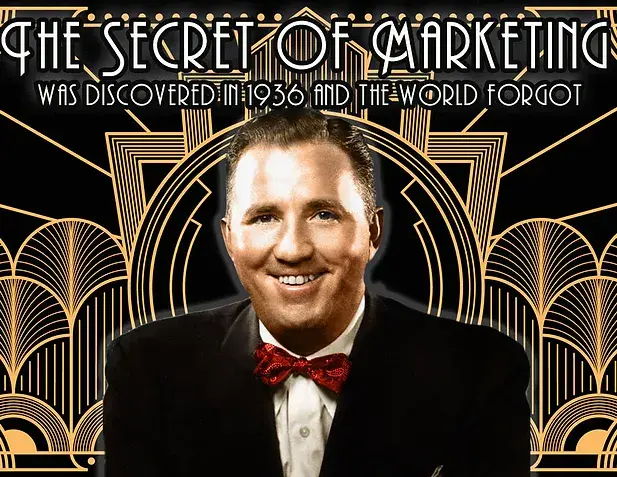
Elmer Wheeler has gone down in history as America's Greatest Salesman. Wheeler achieved this moniker because he worked out the secret of marketing in 1936. That secret is still as relevant today as it was nearly 100 years ago. Yet these 5 points always get forgotten in the modern digital world
Marketing is a simple process. Provide a product or service that people want or need and let them know you have it.
Over the years, technology, culture, products, services and pretty much everything else has changed – but there is one constant. The customer. The people buying. It is a classic mistake for all businesses to forget about the user experience and mis-understand what the customer ACTUALLY wants or needs
Elmer Wheeler understood this. Selling to people, using emotions and understanding what they want not what you think they want.
In the 21st century we call this UX or UI. We use a wealth of tools, analytics and data to get into the mind of the consumer, and still we tend to forget the end user.
Elmer Wheeler wrote is 5 points that are essential when it comes to selling, known as the Wheelerpoints.
These Wheelerpoints are as relevant today as they were in 1936 when he wrote them and tap into the psyche of the consumer, giving them what they want not what you think they want
The 5 Wheelerpoints are
1. Sell the Sizzle, not the Steak
2. Don't Write,Telegraph
3. Say it with Flowers
4. Don’t ask ‘if’ ask ‘which’
5. Watch your bark
Every single one of these points is vital in communicating your message to your target audience. In a world where attention spans are shorter and shorter and competition for sales is increasing daily. The 5 wheelerpoints understand the method to ensure your brand, your message and your product relates and appeals to your target audience
1. Sell the Sizzle, not the Steak
The sizzle has sold more steaks than the cow ever has, although the cow is, of course, mighty important.
It can be a bitter pill to swallow – BUT YOUR CUSTOMERS DON’T CARE ABOUT YOUR PRODUCT. It doesn’t matter what you are selling the customer only cares about HOW THEY BENEFIT FROM THE PRODUCT.
Contrary to popular belief; people don't buy products or services. They don't buy features and benefits either. Instead, people buy what it will mean when they own a product or service
Wheeler explained it best with his clothespin example
When he is about to interview a prospective client, he always carries a clothespin in his pocket, ready to illustrate one of the greatest sizzles he ever found. At the height of his talk to the prospect he whips out the clothespin, holds it up like a boy showing a new jack-knife, then drops it on the floor. The clothespin is square and therefore doesn’t roll. “They won’t roll,” the sizzle he found in square clothespins, sold millions of them to housewives weary of elusive round ones.
Your product has a sizzle. The advantage the customer gets from choosing your product as opposed to your competitor. In the digital world consumers are trained to shop around and compare other businesses. What do you offer that your competitors don’t?
Understand that product, its features and how it works don’t matter to a consumer. All they want to know is how it benefits them. How does your product make their lives easier? How does your product solve a problem that they have? How does your product improve their perception of them to others (i.e., a sportscar or designer handbag). This is the sizzle.
Is black pudding pigs blood and fat or a superfood that is full of iron and protein? Is beer an unhealthy addictive product or a chance to unwind with friends? Is a Louis Vuitton handbag just a piece of leather for carrying your items or a fashion statement that separates you from everyone else?
Heineken’s #openyourworld advert is a brilliant example of selling the sizzle, not the steak
2. Don’t write, telegraph
“If your first ten words aren’t the right words, you won’t have a chance to use the next ten thousand because your customer will walk away from you physically, if he doesn’t float away from you mentally.”
Can you condense your sales pitch and ‘your sizzle’ down to 10 or less words? In Elmer Wheelers day this was done in a traditional face-to-face environment. But in the digital world it is even more important that you get your message across straight away. When pushing your message on social media you have a split second to capture the (potential) consumers before they scroll past your post and onto the next one, and even if they do stop to look you have to capture them with your first sentence. If your email title doesn’t capture the consumers attention, they won’t click it open and browse your message.
Elmer Wheeler was right in 1936 and hes right now. If your first 10 words aren’t the right words, you won’t have a chance to use the next 10,000. No consumer wants to have their time wasted, no consumer wants to read through 1000s of words to get to the point. Simply know what your ‘sizzle’ is and tell the consumer how your business will benefit them in a clear and concise matter.
Essentially this is why movies have a strap line
It sounds simple – but a quick visit to LinkedIn, Twitter or Facebook will show you just how many businesses forget this simple rule.
3. Say it with Flowers
“Back up your words with actions and gestures.”
Understanding your tone of voice as a brand is vital. Wheeler understood that people buy EMOTIONALLY and to ensure that you maintain positive emotions with your customer and with your message is vital.
This is easier with a video or voice over as you can control the tone and infliction of the message – but with written text (either a blog or social media post) it is a bit more difficult as the message can be mistaken when written.
Elmer Wheeler meant the use of positive body language when dealing with customers. Smiling, nodding your head and shaking the hands are all proven ways to build a bond between the salesperson and customer.
Saying it with flowers in the digital world means ensuring your tone of voice is correct. Does your message work? Does your body language and tone of voice in your videos truly say it with flowers.
People buy from people and the people in your business reflect your brand. Are your staff happy, energetic and helpful or do they look unhappy and angry? Take care of the details of your business and ensure your message is delivered with flowers.
It is important to remember never to be fake or insincere with this, as your consumer will see through it straight away. But by ensuring a genuine interest, genuine positive tone of voice or even a more literal take on the Wheelerpoint – your flowers are an added value item or service that comes with your message, a free e-book or discount code in exchange for their custom
4. Don’t ask ‘if’ ask ‘which’
“always give your prospect a choice between something and something … never between something and nothing”
It is the customers choice to spend with you, it is your job to convince them that your business is worth their time, money and investment. However, you can persuade your consumer to spend with you by giving them a choice between 2 options. This still gives the consumer the choice and control, but you control the choices. Don’t give the option of not buying with you, but just the option between variety either colours, size or another variable
Elmer Wheeler practiced this theory with customers choosing size of drink
He noticed that when a customer at the soda fountain requested a cola and was asked whether they wanted “small” or “large,” most chose “small.’ He wondered what would happen if the clerk, instead, just said “Large one?” When they put it to the test, they found that seven out of 10 people said “Yes.” This simple idea could have a dramatic impact on a fast food restaurant’s bottom line. If they sell 500 drinks a day and the difference between a small and a large is 50 cents, converting 70% of their drink orders to large translates into an additional $175 per day. Over a year, that’s an increase of $63,875!
A simple nudge towards a more expensive option generates a huge increase in profit over a year. This is why McDonalds always ask ‘make it large?'
No matter what you are selling, there are always opportunities for add-ons and upselling. By offering a ‘which’ not and ‘if’ you are more likely to influence a sale.
5. Watch your bark
“It’s as much how you say it as what you say that counts…”
Great advice for life, not just sales and marketing. Watch your bark. Similar to the Wheeler point 3 ‘Say it with flowers’ this point is a reminder to maintain the tone of voice of the brand. This subconsciously enforces your message and brand identity. It reminds you to be humble, and not come across arrogant.
Strike the balance between being authoritive on the subject without being arrogant. Ensure that your content is accessible for the consumer that may not fully understand your product / service. By providing the information and educating them, your brand encourages the reader to become a customer. You build the trust as an authority on the subject, meaning that the customer will be more likely to chose to spend with you as opposed to your competition. Always remember to write with your customer in mind, put yourself in their shoes and understand what they are looking for from you.
Your digital content is permanent – always remember to maintain your brand identity and persona – as you never know how your next customer will find you online.
Elmer Wheeler understood people, and people haven’t changed since his prime in the 1930s. This is why he is still talked about today and still considered America’s greatest salesman.
The 5 Wheelerpoints are still VITAL when it comes to sales and marketing – and whilst technology changes and adapts, the basic role of marketing is to appeal to the public and turn them into consumers.
NEVER FORGET THE ENTIRE POINT OF MARKETING IS TO ATTRACT CUSTOMERS. ALWAYS THINK OF THEM WHENEVER YOU DO ANYTHING. WHAT DO THEY WANT, NOT WHAT DO YOU WANT


Comments